By: Akintide Olamilekan Akeem
Walk into many Nigerian schools on a sanitation day and you will find students sweeping classrooms, clearing grasses, emptying waste bins and cleaning their surroundings. In some institutions, it is a weekly routine; in others, it happens occasionally.
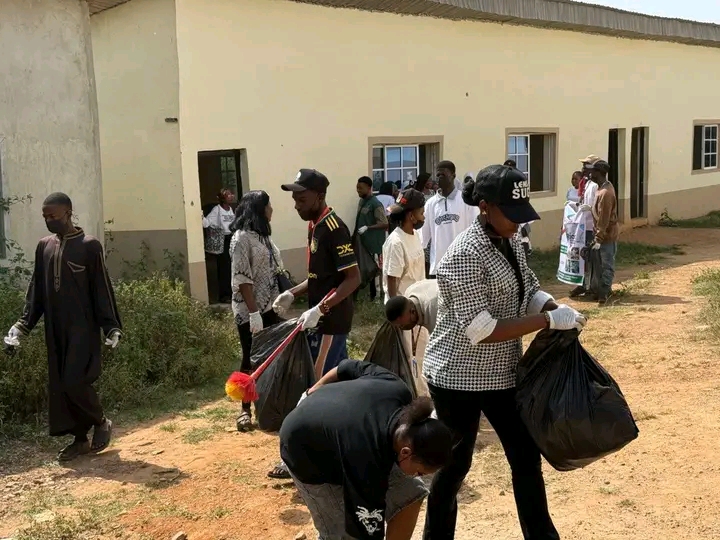
But beyond the sweeping and cleaning lies a bigger question: Are we actually building a culture of environmental responsibility, or are students simply completing another school activity?
Environmental sanitation should be more than picking up dirt. It should teach discipline, responsibility and an understanding of how our daily actions affect the environment and the people around us.
For many Nigerian students, environmental sanitation is a familiar part of school life. It provides an opportunity to understand that keeping our surroundings clean is a collective responsibility.
A student who learns not to throw a sachet on the floor today is more likely to become an adult who understands the consequences of indiscriminate waste disposal tomorrow.
However, we need to move beyond simply telling students to clean. They also need to understand why cleanliness matters.
Plastic waste, blocked drainage channels and poor waste disposal are not just environmental issues. They can contribute to flooding, unhealthy surroundings and public health challenges. This is where schools have an important role to play.

One encouraging aspect of environmental education is the creativity of young Nigerians. Some students are already exploring ways to turn waste into useful products. Innovations around converting plastic waste into alternative energy products demonstrate that what we often consider useless can become a resource when creativity meets knowledge.
This is the kind of thinking our polytechnics and universities should encourage.
Tertiary institutions should not only teach students how to pass examinations. They should also provide opportunities for them to develop practical solutions to problems affecting their communities.
Imagine a generation of students who do not simply complain about plastic pollution but develop recycling systems, waste-to-energy projects and other locally relevant solutions. That is the kind of innovation Nigeria needs.
There is also a direct connection between the condition of a school and the experience of its students.
A student is more likely to feel comfortable learning in a classroom with proper ventilation, clean surroundings and functional toilet facilities than in an environment filled with dirt, unpleasant odours and poorly maintained infrastructure.

A clean environment does not automatically guarantee academic success, but it creates better conditions for learning, health and concentration. This is why environmental maintenance should also be seen as an educational and administrative responsibility.
Students should not be viewed only as beneficiaries of environmental policies. They can also become agents of change.
As Public Administration students, for instance, we learn about policies and their implementation. But a policy is only effective when it reaches the people it is meant to serve.
Students can help take environmental awareness beyond the classroom, into their homes, markets, religious centres and communities.
The message can be simple. Do not dump waste in drainage channels, separate recyclable materials where possible, keep public spaces clean, and understand that environmental responsibility begins with individual action.
Environmental consciousness should not begin when a student gets to a university or polytechnic. It should begin from childhood.
A child should learn early that throwing waste into a drainage channel can contribute to flooding, while planting and protecting trees contributes to a healthier environment.
If environmental education becomes part of everyday learning from primary school through tertiary education, we can gradually build a generation that sees sanitation not as punishment, but as a normal part of responsible living.
As a student of Public Administration at The Polytechnic, Ibadan, I believe environmental sanitation should go beyond the traditional practice of sweeping and clearing school compounds.
Government should provide the necessary infrastructure. School management should maintain facilities. Students should take responsibility for their surroundings. Environmental education should also become more practical and consistent.
We need more recycling points, proper waste disposal systems, environmental clubs, tree-planting initiatives and community sensitisation programmes in our schools.

The goal should not simply be to have a clean campus on sanitation day. The goal should be to develop students who will maintain clean environments even when nobody is watching.
When we teach young people to care for their environment, we are teaching them responsibility.
And when we build a culture of responsibility, we are not only maintaining our schools, we are preparing better citizens and a more sustainable Nigeria.
A clean school is more than a beautiful environment. It is a classroom for responsibility, leadership and sustainability.
About The Author