By: Press Council
Persistent technical glitches and complaints of disenfranchisement forced the postponement of The Polytechnic, Ibadan Students’ Union election for the 2026/2027 academic session on Saturday, November 14, 2026, leaving the electoral process inconclusive despite several interventions by the Electoral Committee and the institution’s management.
A total of 30,920 students were expected to participate in the election, which was conducted electronically and involved staylites of the institution, including current National Diploma (ND) II and Higher National Diploma (HND) II students, as well as recent graduates of the two levels. However, only 1,449 votes were reportedly recorded during the exercise.
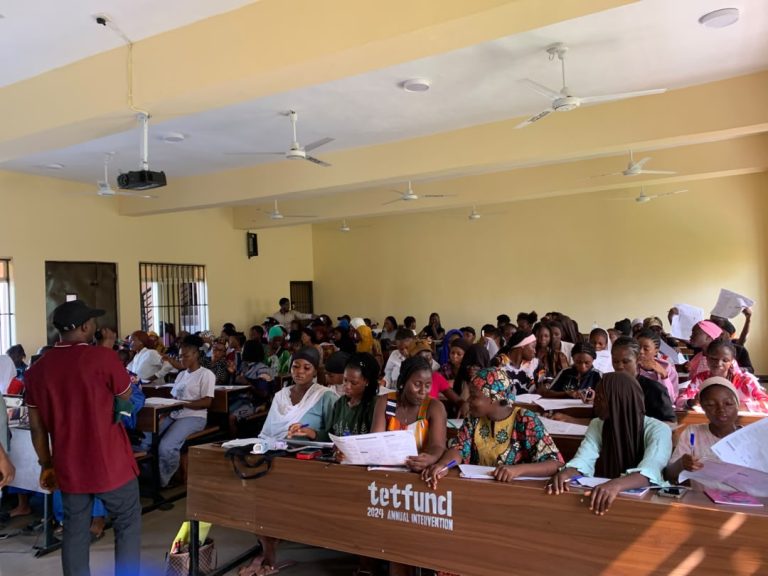
The electronic voting process was monitored at the designated election monitoring centre at the Assembly Hall, North Campus, where electoral officials, candidates’ agents, faculty representatives, security personnel and other stakeholders observed the proceedings.
Before voting commenced, candidates’ agents were instructed to verify that their respective candidates’ names were correctly displayed on the ballot. Following the verification, they were invited to participate in the voting process.
Addressing the agents, the Chairman of the Electoral Committee and Dean of Student Affairs, Mr. Makinde John, urged all participants to abide by the electoral guidelines, maintain order and exercise restraint throughout the process.
Describing the election as a defining moment in the institution’s history, Mr. Makinde emphasised the responsibility of all stakeholders to ensure a credible electoral process.
“Today, we write down our history in Polybadan. Either we like it or not, whatever happens here today will be documented. And that is why we must be conscious of what we do here today,” he said.
He further reaffirmed the neutrality of the institution’s management, stressing that no candidate was being favoured in the election.
“As far as The Polytechnic, Ibadan management is concerned, our position is neutral. The bosses have no candidates. You are all our children and students,” he stated.
However, the voting process soon encountered challenges as complaints emerged from eligible students who reportedly could not receive their voting codes through the designated channels. The development raised concerns over possible disenfranchisement and threatened the inclusiveness of the electoral exercise.
In response to the complaints, at about 2:30 p.m., Mr. Makinde proposed extending the voting period from its initial closing time of 3:40 p.m. to 4:10 p.m. to give affected students additional time to access their voting codes. Following deliberations among the agents, the proposed extension was approved.
At approximately 2:35 p.m., the institution’s Rector, Dr. Lasisi Taiwo Abideen, arrived at the situation room, where he observed the proceedings and interacted with the agents and members of the Electoral Committee.
As part of further efforts to address the technical difficulties, Mr. Makinde announced at about 3:50 p.m. that the method of distributing voting codes would be adjusted, with students expected to receive their codes through SMS. The adjustment followed complaints from students who were unable to access their codes through the existing arrangement. Agents were subsequently asked to verify the new process.
Despite these interventions, the challenges persisted, with the Electoral Committee unable to resolve the complaints satisfactorily.
At about 5:30 p.m., Mr. Makinde addressed the agents, acknowledging that the election had been characterised by several challenges, including complaints of disenfranchisement. He explained that various measures had been adopted to resolve the situation but had failed to produce the desired result.
Consequently, he announced the postponement of the election, stating that the exercise could no longer continue under the prevailing circumstances. He, however, maintained that votes already recorded would stand.
He further assured students that arrangements would be made to ensure that voting codes were distributed at least 24 hours before the next election, giving eligible voters sufficient time to receive their codes through the appropriate channels.
Meanwhile, a total of 1,449 votes were reportedly recorded during the exercise, against the 30,920 students expected to participate.
Despite the postponement, preliminary vote tallies were recorded across the various contested positions.
In the presidential contest, Yusuf Olanrewaju Mujeeb polled 1,018 votes, while Badmus Rauf Adeola recorded 349 votes.
For the position of General Secretary, Jimoh Tofunmi Emmanuel secured 834 votes against Akinboyewa Temitope Emmanuel, who polled 383 votes.
In the Treasurer contest, Ogunloye Nifemi Odunola recorded 1,017 votes, while Ademola Mutiyat polled 232 votes.
For Welfare Secretary I, Sogaolu Solomon Sunday secured 914 votes, while Olabode Yetunde Oyindamola recorded 374 votes.
In the Auditor contest, Alaka Wasiu Adekunle polled 887 votes against Akinola Priscilla Odunayo, who recorded 434 votes.
For Welfare Secretary II, Salawudeen Wajud Olanshile recorded 822 votes, Daramola Esther Funmilola polled 420 votes, while Olaniyi Opeyemi Oluwatosin secured 83 votes.
In the Vice President I contest, Orongbangba Ayotun Mercy recorded 799 votes.
For Sports Director, Lawal Ibrahim Olalekan polled 851 votes, while Bamidele Olatunbosun Faruq recorded 510 votes.
In the Financial Secretary II contest, Olayinka Tinuola Oluwabusayomi secured 851 votes against Muhammed Mariam, who polled 321 votes.
For Social Secretary I, Adekoya Marvelous Moses recorded 758 votes.
The preliminary tallies further showed that Mustapha Anuoluwapo Yusuf recorded 1,007 votes for Public Relations Officer I, while Bolarinwa Kehinde Aliyah secured 924 votes for Public Relations Officer II.
The Assistant General Secretary position, Emily Esther Oluwafumilayo also recorded 853 votes
Notwithstanding the preliminary figures recorded across the various positions, the Electoral Committee did not announce any winners, as the election remained inconclusive following its postponement.
The development leaves the institution’s Students’ Union electoral process awaiting further clarification from the Electoral Committee, particularly regarding the next phase of voting, the resolution of the technical challenges and the status of the votes already recorded.
The exercise underscores the importance of adequate electoral preparation, reliable electronic voting systems and equal opportunities for eligible students to exercise their democratic rights.
About The Author