By: Dabiri Fawaz
National Association of Polytechnic Engineering Students (NAPES), The Polytechnic, Ibadan chapter, recently held its Inter-Departmental Debate Championship, bringing together students from various engineering disciplines to examine the growing impact of Artificial Intelligence (AI) on the future of engineering.
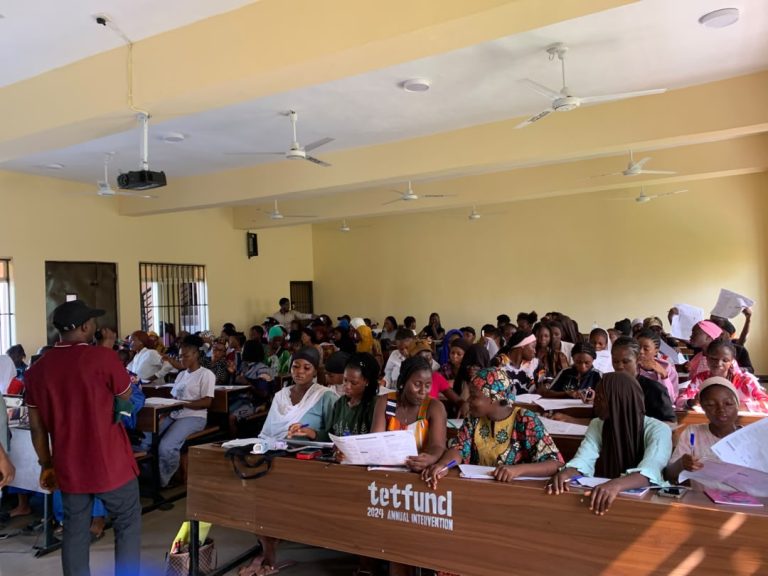
The debate which took place on the afternoon of Monday June 29th of 2026, themed “The Role of Artificial Intelligence in the Future of Engineering: A Gift or a Threat?” attracted students, academic staff, and other stakeholders who gathered to witness a vibrant display of intellectual engagement, critical thinking, and public speaking skills.
The event was chaired by Engr. Oke D.B., while Afenifere Yusuf delivered the keynote address.
Members of the judging panel included Comrade Jenifer Okafor, Miss Poly Ibadan, and Miss Oladapo Otinlola, who also served as timekeeper and assistant to Miss Poly Ibadan.
Dignitaries present at the event included the NAPES SRC Speaker, Rt. Hon. Siyanbola Sodiq Olamide; SRC Clerk, Hon. Muktar Azeez; Sen. Adeosun; Sen. Smith Toluwalade; Deputy Speaker, Sen. Oyedele Paul; and Sen. Bejide Opeyemi, the SUG Chief Security Officer, alongside presidents of various departments and other student leaders.
In his opening remarks, NAPES President, Comrade Zakariyah Khalid Olalekan, described the competition as an avenue for students to exchange ideas and prepare for the realities of a rapidly evolving technological world.
He commended the organising committee for its dedication to promoting academic excellence and innovation among engineering students.
Delivering the keynote address, Afenifere Yusuf urged students to view Artificial Intelligence not as a threat but as a tool for advancement.
He noted that AI is transforming industries globally and that engineers must be prepared to adapt to its rapid evolution.“Artificial Intelligence is not here to replace engineers,” he said. “Rather, it is a tool that enables us to work smarter and make better decisions.
The engineer remains in control, while AI serves as an assistant.”He further emphasized the importance of data literacy and digital competence, warning that graduates who fail to understand emerging technologies risk losing relevance in today’s competitive workforce.
Representatives from seven engineering departments which includes Computer Engineering, Mechanical Engineering, Civil Engineering, Electrical Engineering, Metallurgical Engineering, Chemical Engineering, and Mechatronics Engineering presented compelling arguments on the debate topic.
The Chemical Engineering team argued that while AI enhances efficiency and supports fault detection, it cannot replace human judgment, leadership, and creativity.
Mechanical Engineering students highlighted the growing synergy between Artificial Intelligence, the Internet of Things (IoT), and modern machinery, describing AI as a key driver of future industrial advancement.
The Electrical Engineering team emphasized AI’s capacity to solve complex problems and accelerate innovation, while the Metallurgical Engineering representatives likened AI to a calculator, arguing that technological tools are designed to support, not replace, professionals.
The debate featured insightful presentations, rigorous analysis, and healthy competition among all participating departments.
At the conclusion of the contest, the Computer Engineering Department emerged overall winner with a total score of 508 points.

Mechanical Engineering followed in second place with 446 points, while Civil Engineering placed third with 436 points.
Electrical Engineering came fourth with 347 points, followed by Metallurgical Engineering with 293 points.
Chemical Engineering scored 286 points, while Mechatronics Engineering finished in seventh place with 258 points.
The event ended with a call for students to embrace innovation, develop strong technological competencies, and position themselves for the opportunities presented by Artificial Intelligence and other emerging technologies.
For many participants, the debate went beyond competition. It served as a reminder that the future of engineering will be shaped not only by technological advancement but also by the ability of young engineers to adapt, learn, and innovate in an increasingly digital world.
About The Author